Craft
The Brutal Business of Golf Courses
American golf just set a rounds record on 2,000 fewer courses than it had in 2006. Most of those courses cover their operating costs. Far fewer can fund the day the irrigation dies.
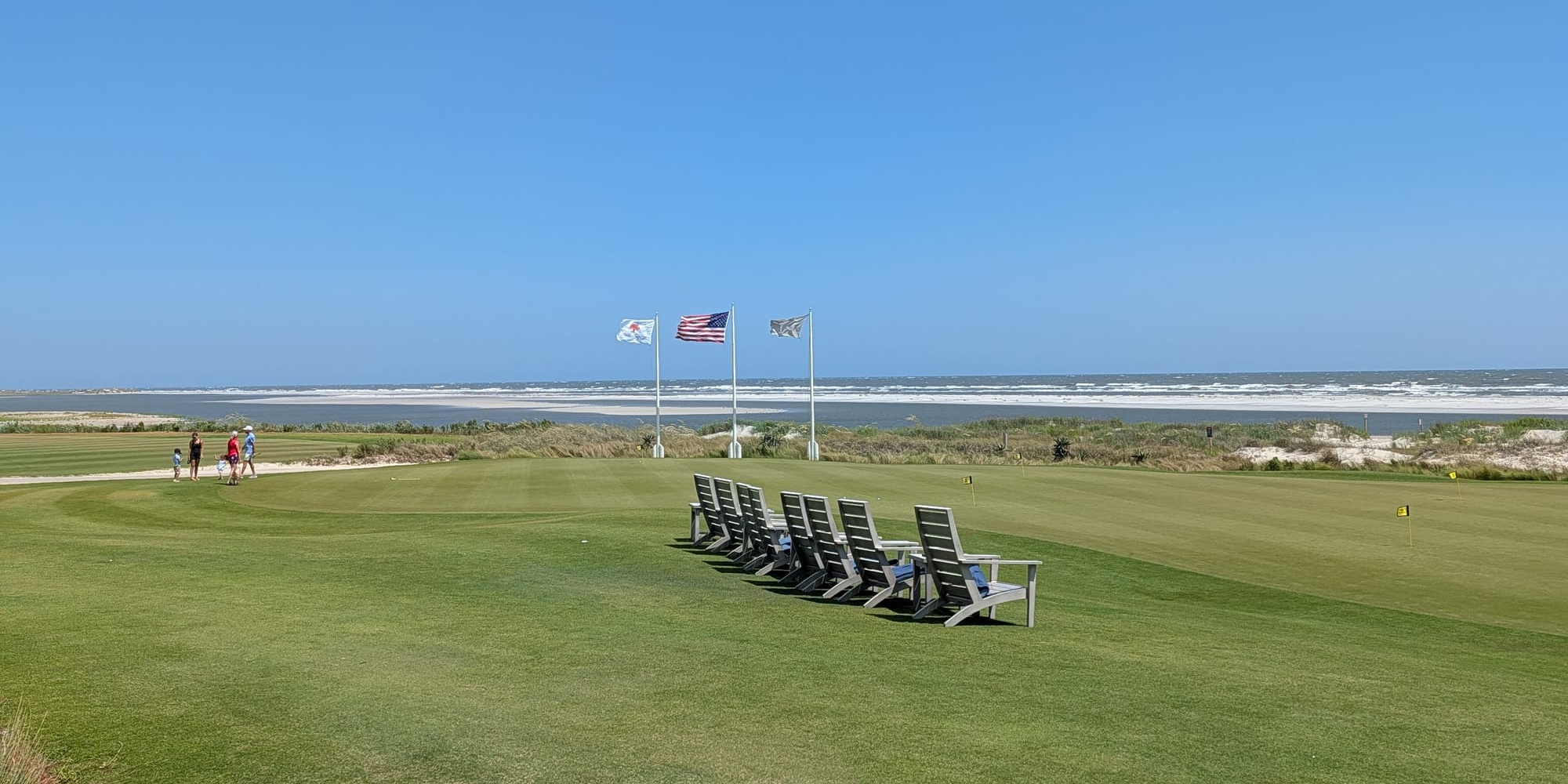
Sweetens Cove sits in a valley in South Pittsburg, Tennessee. Nine holes. No clubhouse. For years the pro shop was a shed from Home Depot, and the bathroom situation was best described as optional. On a Thursday in peak season it costs $190 to play all day with a cart, plus a $15 booking fee, plus tax. That is not a cheap round of golf. People drive six hours for it anyway.
In 2019 a group of visitors liked the place enough to buy it. Among them were Peyton Manning and Andy Roddick. A year later they launched a bourbon named after the course. The 2021 release ran to 50,000 bottles at close to $200 each, which is roughly $10M of whiskey at retail from a nine-hole course with no plumbing.
Sit with that for a second, because it is the whole industry's problem in one sentence. None of it is a criticism of Sweetens Cove. The golf is excellent, the owners did nothing wrong, and the bourbon commands $200 a bottle only because the golf earned the reputation that makes the name worth something. That is exactly the point. The course generated the value and then needed a second product to collect it, because a nine-hole green fee never could.
The $102B game
Golf in America is bigger than it has ever been.
The game generates about $102B a year in direct impact, meaning money spent on golf itself: green fees, equipment, club operations, turf, real estate and tournaments. Count the knock-on effects, which is what golf's suppliers and their employees spend in turn, and the figure reaches $226.5B and something over 1.65M jobs based on the industry's 2025 survey numbers.
The players arrived in a wave nobody in the industry predicted. In 2025, 48.1M Americans played golf in some form, half again as many as in 2015. Of those, 29.1M played on an actual course. The other 19M never set foot on one, playing entirely at simulators, ranges and entertainment venues.
That second number is the biggest change in the game in 30 years, and it explains the first. The largest adult on-course cohort is now 18 to 34 years old. Women are 28% of on-course golfers, up 46% since 2019. Golf did not get younger because courses did anything clever. It got younger because Topgolf put a bay and a beer between a stranger and the first tee, and a proportion of those strangers eventually booked a tee time.
Now the part that decides everything that follows. All of that new demand arrived at fewer courses.
There are roughly 16,000 golf courses at 14,000 facilities. The two numbers differ because a facility is an address and a course is 18 holes, so a club with 36 holes counts once as a facility and twice as a course. About three-quarters of courses are open to the public: 2,600 municipal and 7,600 daily-fee facilities.
Supply grew 44% in the 20 years to 2006. Then it fell 13%. Roughly 2,000 courses closed, and the correction only stopped recently. Course closures have declined for five straight years, 2024 saw the fewest since 2004, and more than 140 new courses were in planning or construction at the start of 2026.
Why they closed is the subject of this piece. The short version: a course can pay every bill it receives for years and still be unable to replace the pipes buried under it. On the day that reckoning arrives, the land is usually worth more than the golf standing on it... sometimes to the tune of $30.5M.
Meanwhile, play kept climbing. Golfers played a record 551M rounds in 2025, up 1.2% on 2024's 545M, which was itself a record. That is the sixth consecutive year above 500M. Record demand, on 13% fewer golf courses.
With that backdrop, one would think golf should be a wonderful business. It is not. Here is why.
The basics: what comes in, what goes out
On average, a golf course in the United States has roughly 113 acres of maintained turf as its core revenue-generating asset. It runs against a fixed number of daylight hours and a hard ceiling on how many people can be on it at once. You cannot add a shift. You cannot build a second floor. The inventory is tee times, it expires nightly, and weather can delete a week of it.
The five ways money comes in, in rough order of size: playing fees, which means green fees at a public course and dues at a private one; food and beverage; cart rental; pro shop merchandise; and the driving range. Private clubs have a sixth: initiation fees and capital dues, which members pay on top of dues and which sit outside operating revenue entirely. Only clubs have it because only clubs have members who can be assessed, and it turns out to be the most important number in this piece.
Four ways money goes out of operations, again in rough order of size. Course maintenance, which is turf, water, chemicals and the crew who apply them. Golf operations payroll. Food and beverage costs. And general and administrative, which carries insurance, utilities and management fees.
Capital is the fifth destination, and it is not an operating expense. It is the replacement of everything that wears out. It is budgeted and accounted for separately, and the distance between those two facts is most of this piece.
Here is how those net out.
| Expense | Municipal | Daily fee | Private |
|---|---|---|---|
| Course maintenance | 51.1% | 38.8% | 35.6% |
| All other operating | 36.3% | 48.7% | 62.2% |
| Total operating expense | 87.5% | 87.5% | 97.8% |
| Operating surplus | 12.5% | 12.5% | 2.2% |
| Capital expenditure | 14.9% | 9.0% | 12.5% |
Municipal and daily-fee courses spend the same 87.5% of revenue by opposite routes. A muni pours it into grass. A daily-fee course spends it on the building, the staff and the marketing. Same efficiency, different philosophy, and you can see which is which from the parking lot.
Private clubs run at <3% margins, and that is on purpose. A member-owned club is a cooperative, not a company. Its job is to break even while delivering the most golf and the best clubhouse experience the dues will buy. Making money is not the point.
Now put the surplus against the capital bill. Municipal courses throw off an operating surplus of 12.5% of revenue and face a capital bill of 14.9%. That gap is the entire subject of this piece, and we will come back to it with a number.
We'd note these shares are from 2009 as no other credible survey has been taken since. We understand this was the worst year in modern golf. Depressed revenue makes every expense look larger, so read each percentage as a ceiling rather than a measurement.
Weather is a line item
Every golfer knows rain cancels golf. Fewer people appreciate that weather is the largest single source of revenue variance in a course's year, and that the industry measures it formally.
Pellucid publishes a monthly figure called Golf Playable Hours, which is exactly what it sounds like: how many hours the weather actually allowed play, against the same month a year earlier. July 2026 came in 2% below the prior July nationally, against a year to date running 1% above 2025, with 21 regions favorable, 13 unfavorable and 11 neutral.
A course cannot really hedge this, though not because the market is missing. Weather derivatives have traded since 1999 and volumes are climbing. They are the wrong instrument. The listed contracts settle on heating and cooling degree days at a short list of major cities, so they price temperature rather than playable hours. A muni an hour from the reference station carries the difference itself. It can only hold enough cash to survive a wet spring, which sends us straight back to that surplus line.
The two costs nobody puts in the brochure
Time to be nerdy for a moment, because this is where golf's accounting gets genuinely strange.
Depreciation. Under Revenue Ruling 2001-60, a modern putting green counts as a land improvement and depreciates over 15 years. So do cart paths, bridges, drainage and irrigation.
But a push-up green does not depreciate at all.
A push-up green is the old way of building one: take the dirt already on site, push it into an interesting shape, plant grass, walk away. A modern green is a layer cake, roughly 12 inches of specified sand over four inches of gravel over a network of perforated drainage pipe.
So the tax code's position is that a modern green wears out and an old-fashioned one lasts forever. That sounds like the IRS taking a position on golf architecture. It is not. It is the IRS counting pipe. Buried pipe is equipment, equipment wears out, and a mound of shaped dirt is just land. Land does not depreciate, because land does not break.
Remember the number 15. It is the assumed life of an irrigation system in years, and it comes back to bite this piece in about 1,500 words.
Property tax. Golf gets treated unusually gently here. Twenty-three states run current-use assessment programs that value open space at what it is used for rather than what it could sell for, and seven of them name golf courses specifically. Nevada caps the assessed value of golf course open-space land at $3,432 per acre. Massachusetts caps recreational land at 25% of fair market value.
Put that Nevada figure against the land under a suburban golf course and the size of the break is obvious. Defenders say a course delivers green space, drainage and tree canopy the public benefits from without paying for. Critics say it is a private business paying pennies on land worth millions. Both are correct, which is why the fight reruns every few years in every state. Since property tax is levied by local government, it is hard to get a uniform benchmark. Just understand the nuances in taxation that the industry faces.
Subscribe
Sign up for Local Rules
The mark, the money, the memory.
No spam. Unsubscribe anytime.
What private equity actually does here
Corporate and private-equity ownership gets written about as though it were a different business. It is the same business with a different capital structure, and the structure is the story.
Leverage gets sized against EBITDA, so the model needs provable, predictable cash flow. That means it works at clubs with dues and fails at courses with green fees, because a lender will underwrite a membership roster and will not underwrite the weather.
Watch what happened to the largest operator in American golf. KSL Capital bought ClubCorp in 2006 for $1.8B and took it public in 2013. Apollo took it private again in 2017 for $2.2B, which was 8.4x forward EBITDA. It was renamed Invited. In late 2022, S&P downgraded Invited to selective default, the rating agencies' term for a borrower that has stopped paying some of its debts on the original terms while continuing to service the rest. In June 2026, KSL bought it back for a reported $2.6B to $3B, or about 7.4x, financed with a $1.7B private credit package, and it now runs more than 150 clubs.
Read those numbers again. Earnings at the largest golf operator in America grew by about 35% across those nine years, from roughly $260M to $350M. Its enterprise value grew by less than a fifth, because the multiple a buyer would pay fell from 8.4x to 7.4x. The company got materially bigger through the biggest participation boom in the sport's modern history, and the market repriced it downward anyway.
Where did the growth go? Into dues and into debt service. Same-store golf revenue fell 0.2% and 0.7% in consecutive years while dues rose 3.7% and 3.1%. The golf got no better. The bill for belonging did.
Analysts covering it drew a distinction the industry should steal: reinvention capital versus maintenance capital. Reinvention capital is what gets spent at a newly acquired club to justify a dues increase. Maintenance capital is what keeps the golf course from degrading. The first is a growth story a sponsor can sell. The second is a cost.
Whether that is why the multiple fell, nobody publishes, and interest rates moved a long way across the same nine years. But it is the question worth asking, because a multiple is a price paid for future cash flow and deferred maintenance is a claim against exactly that. A buyer paying 7.4x for what changed hands at 8.4x is either less optimistic about golf or more realistic about the condition of what it is buying.
That is not a scandal. It is what the capital structure asks for.
The thing this whole piece is about
Most golf courses cover their operating costs. Far fewer can fund the day the irrigation dies.
Operations and capital run on two different clocks. Operations runs monthly, and month to month it works: the mowers run, the crew gets paid, the grill sells cheeseburgers. A wet spring dents it and the course survives. Capital runs by the decade, and it does not arrive gradually. It arrives as one invoice for an irrigation system that the tax code assumed would last 15 years and that the course has been nursing for 30 years.
Where the money comes in
Revenue arrives through the same six doors in America. What is surprising to us is the revenue mix, both where things differ and also where they are similar.
| Revenue line | Municipal | Daily fee | Private |
|---|---|---|---|
| Playing fees (dues, at a private club) | 50–58% | 42–50% | 48–55% |
| Cart rental | 12–18% | 8–14% | billed separately |
| Food and beverage | 2–14% | 20–25% | 30% |
| Pro shop | 8–13% | 8–12% | 11.1%, combined with golf operations |
| Driving range | 4–8% | 4–8% | included above |
| Other | 3–6% | 3–8% | 5–7% |
| Capital injections | None | None | +15.1% |
The models agree on the only line that is actually golf. Playing fees run 42% to 58% of revenue whether the course is owned by a city, a company or its own members. A muni charging $31 and a country club charging five figures a year are, structurally, selling the same proportion of the same thing. Everything the three models argue about sits in the other half of the table.
The muni is the least diversified business on the table. Playing fees and cart rental together are 65% of a municipal course's revenue, against 54% at a daily-fee course. Both of those lines are sold by the tee time and both of them vanish in the rain, so the model with the thinnest capital cushion is also the one most exposed to weather. The private club spreads its revenue across more lines, and one of those lines, food and beverage, is a trap we will get to shortly.
Now the last row, which is the whole piece. Private clubs have a revenue line that no public course has: capital injections, initiation fees and capital dues, at 15.1% of revenue. It is collected outside operating revenue entirely, and spendable on nothing but replacement. A municipal or daily-fee course has no such line at all. That row is not a profitability advantage. Private clubs run the thinnest operating margin of the three at 2.2%. It is a solvency advantage. Every line above it is about running a golf course. The last row is about owning one.
The green fee is not one number
The average 18-hole green fee at a public course is about $41, up 27% since 2019. That average conceals a national market that behaves like several different countries.
Nevada averages $115. Hawaii, $112. Arizona, $82. At the other end sit Oklahoma at $31, Kansas and Indiana at $33, Iowa at $34, Tennessee at $35. That is a 3.7x spread inside one country, and 32 states still average under $50.
The spread is also widening. Courses charging above $80 grew 40% since 2019 while courses under $50 declined 5%. Resort fees rose 37%, and more than half of American golf resorts now break $100 in peak season. The top of the market is pulling away from the bottom, which matters because the bottom is where most municipal golf lives.
Why you pay for a cart at a club you already joined
This one irritates everybody, and the answer is boringly mechanical.
A cart fleet is a capital asset with its own replacement cycle, separate from the golf course. Fifty carts at roughly $6,000 to $14,000 each is a $300,000 to $700,000 purchase, which is why most courses lease instead at $180 to $250 per cart per month. Leasing runs $108,000 to $150,000 a year for that fleet, and across a 60-month term it costs more than buying the carts outright. That is the reason it happens rather than an argument against it. A course that cannot fund an irrigation system out of operations cannot write a $300,000 check for carts either, so it converts a capital problem into an operating line and pays a premium for the conversion. It is the same trade the irrigation system will force later, made smaller and earlier, and the cart barn is the one place a golfer can watch it happen. Maintenance adds $600 to $1,600 per cart, or another $30,000 to $80,000.
So a 50-cart fleet costs somewhere between $140,000 and $230,000 a year before a single golfer turns a key. Clubs recover it with a cart fee. Members who own their own cart pay a trail fee, typically $500 to $2,750 a year, for the wear that cart puts on the turf.
Your dues bought you the golf course. They did not buy you the fleet.
Food and beverage is the biggest lie on the revenue table
Look at the F&B row again. It runs from 2% of revenue at a municipal course to 30% at a private club, the widest spread on the table, and it is the main reason two courses of identical size run unrecognizably different businesses. A snack window is not a wedding venue.
Now the part that ruins it. Club Benchmarking's data shows 70% of clubs lose money on food and beverage. F&B is roughly 30% of club revenue and contributes approximately zero gross profit (if not a loss), while dues are 50% of revenue and 80% of gross profit.
F&B is an amenity that happens to move a lot of money, but money is not the same as margin that covers overhead. Chasing weddings to fix a golf course's finances is a strategy with a long history and a poor record.
Outings, and an honest estimate
Corporate outings, charity scrambles and member-guest tournaments are a real revenue stream that no one credibly measures so we made an attempt to estimate it.
An outing is a bundle: green fees at or near rack rate, carts, and a banquet. If a typical public course runs 15 to 25 outings a year at 60 to 100 players, that is 900 to 2,500 player-rounds sold at a premium, against a total of perhaps 30,000 rounds. Applying rack green fees plus F&B spend, we estimate outings at roughly 8% to 15% of revenue at a daily-fee course, and below 5% at a typical muni.
Margin should sit above the golf-only average on the green-fee portion and at or below zero on the food, consistent with the F&B economics above. In the end, this effort improves visibility and awareness of a course but brings negligible margin dollars to cover expenses and stash cash for a rainy day fund.
The Sweetens Cove maneuver
Which brings us back to the bourbon.
A nine-hole course in Tennessee could not have earned $10M selling golf. Nine holes, a fraction of the rounds a full course sells, no clubhouse to sell food from: the arithmetic does not reach seven figures, let alone eight. It earned it by selling an idea about golf to a national audience, most of whom were never going to make the drive to South Pittsburg.
That is the most interesting revenue development in the sport, and it is barely golf revenue at all. Courses with genuine identity have discovered they can sell merchandise, whiskey, hats and membership in a story to people who will never play there. Courses without that identity cannot, and that is a much larger portion of the aforementioned 16,000.
Where the money goes out
Maintenance is the one cost line in golf with a current, free, primary source, which is why it is also the one everybody argues about.
Look at the acreage row first, because it is the quiet miracle in this piece. Every ownership type maintains between 111 and 116 acres. Municipal, daily fee, semi-private, private: the physical asset is effectively identical.
Which means the difference in spending is not a difference in size. A private club spends roughly twice per acre what a daily-fee course spends on exactly the same amount of grass. It buys more mowing passes, more hand-work, more people, better sand, tighter tolerances. The gap between a $6,000 acre and a $12,000 acre is not more land. It is more attention per blade of grass.
Labor is the majority of it, and it is the lever
Between 52% and 58% of a maintenance budget is people, and payroll has climbed steeply since the last survey two years ago.
The superintendent runs the golf course as an agronomic operation: turf health, water, chemicals, budget, crew, and the daily judgment calls about whether a green can take traffic. Average salary $121,238, up 10.6% from the 2023 report, and $138,303 for certified superintendents. The assistant superintendent, who runs the crew in the field and takes the 4am shift, averages $62,184, up 10.5%. The equipment manager, who keeps a fleet of very expensive, very precise mowers cutting at a consistent height, averages $68,154, up 12.5%. All three outpaced national wage growth of 8.1% over the same period.
On the golf side rather than the grounds side, salary benchmark sources put a head golf professional near $108,000, and closer to $127,000 with PGA credentials. The head pro runs the golf operation: tee sheet, lessons, the pro shop's buying and margin, tournaments, and the member relationships that decide whether people renew.
Labor is the largest line item and also the most controllable one. When a course is squeezed, it does not announce a cut. It leaves a position open and gets slow about hiring for it.
What that looks like on the ground, concretely: bunkers raked every other day instead of every morning. Rough mowed once a week instead of twice, so a slightly wayward drive is now a lost ball. Divots on par threes filled on Fridays instead of daily. Green speeds that drift between the front nine and the back. Nothing that generates a complaint on its own. All of it together is why a course you loved in 2019 feels tired now, and nobody at the club can point to the decision that did it, because there wasn't one.
What the rest of the budget buys
Cost composition barely moves between a muni and a country club, because growing grass is growing grass. Cost level moves enormously. When a course has less to spend it does not restructure the budget. It buys less of everything, and the first thing it buys less of is people.
One exception worth flagging: municipal courses generally underfeed. They run fertilizer at about 4.6% of budget against 6.1% to 6.3% elsewhere. While on the surface, that is a small percentage on a smaller budget, it is noticeable after several seasons.
Which is the honest explanation for the roughly twofold gap in spend per maintained acre between a private club and a muni. What a private club sells, beyond the tee sheet a member never has to fight for, is grass: firmer fairways, truer greens, bunkers that play the same in June and September. That is the product, and it is the reason a club spends $12,128 an acre against a daily-fee course's $5,890. A club that stops paying for it does not fail in a year. It gets a little worse every season until the members notice they are paying private money for public conditions... then it fails.
Water, and the widest spread in golf
Something as critical as water should have more transparency. GCSAA publishes water spend for two regions only, the cheapest and the dearest, so there is no national picture to draw. Total budgets vary 2.3x by region while water varies 7.7x. Maybe this is a good question for your local pro or super when you want to make small talk.
Only 27% of courses buy water at all. The rest pull from wells, ponds, effluent agreements or rights attached to the land. For the courses that do buy it, the average bill is $107,562 a year, and the regional range is genuinely absurd: $32,914 in the North Central region against $254,110 in the Southwest.
That is a 7.7x spread, the widest of any line item in golf, and it has nothing whatsoever to do with how well the course is run. Two identical superintendents with identical budgets and identical grass will post wildly different numbers because one of them works in Arizona.
Water is also the line most likely to break the model in the next decade, because it is the one where the price is set by drought and by politics rather than by the golf industry.
The half of the P&L nobody publishes
"All other operating" is 36% to 62% of revenue depending on ownership type, and no association benchmarks it the way GCSAA benchmarks turf. This is the single largest measurement gap in the sport.
An NGF study estimated that full-service management fees run 4% to 6% of revenue and a lease-fee structure 5% to 8%. For those who are not familiar, full-service management is a city hiring a private operator to run the place while the city keeps every dollar of revenue and every dollar of expense on its own books. The fee buys professional management and access to national purchasing. A lease is the other way round: the operator takes the revenue, carries the costs and the risk, and pays the city rent. The difference is not the percentage. It is who is holding the bag in a wet spring.
We use AI where it makes sense, and researching insurance spending was one of those areas. Because member-owned clubs have reporting obligations, we are able to pull their Form 990, where Part IX carries a line for insurance and nothing else. Our AI scoured 766 clubs across 49 states between 2022 and 2023.
| Club size, total expenses | Clubs | Median insurance | Share of expenses |
|---|---|---|---|
| Under $1M | 348 | $13,587 | 4.04% |
| $1M to $3M | 159 | $52,373 | 2.77% |
| $3M to $6M | 148 | $94,540 | 2.24% |
| $6M to $10M | 118 | $171,812 | 2.20% |
| Over $10M | 109 | $260,411 | 1.67% |
The median club spends $52,574 a year and 2.6% of everything it spends. The middle half sits between 1.7% and 3.7%, and the top tenth pays more than 6%. Two things in that table are worth having.
Insurance is a regressive line. In dollars it rises with the club, from about $14,000 at the smallest to $260,000 at the largest. As a share it falls the whole way, from 4% to 1.7%. A small club is buying the same policies against the same 113 acres out of a much smaller budget, which is a version of the problem this whole piece keeps finding.
It is not one of the big three, and it is not nothing. At 2.6% it does not belong in a sentence with labor. At 6% it is larger than fertilizer, fungicides and fuel combined. Which end of that a course sits on is increasingly not up to the course.
Municipal courses are harder to read, because city budget books roll golf up into personal services, operating expenses and capital and stop there. Fort Myers and Tucson both do exactly that. The detail turns up instead in the consulting reports cities commission and then publish in council packets. San Francisco's runs the numbers course by course: insurance of $100,000 at the 36-hole Harding and Fleming complex, $50,000 each at Sharp Park and Lincoln Park, and $30,000 at the short course at Golden Gate. Those are 2007 projections rather than audited actuals, so use the ratios and not the dollars.
The ratios are the interesting part. As a share of operating cost the four municipal courses run 2.9% to 4.8%, and the smallest course on the list carries the highest share. That is the same shape the 766 private clubs show, arrived at from a different ownership model, a different disclosure regime and a different decade. Insurance is a fixed cost pretending to be a variable one, and fixed costs fall hardest on small operations.
What that money actually buys is worth spelling out, because it is not one policy. A city hiring an operator specifies the schedule, and Charlottesville's is representative. Workers' compensation. Employer's liability at $100,000. Commercial general liability at $1M per occurrence, covering bodily injury, property damage and completed operations. Automobile liability at $1M. And then the one nobody outside the business would guess. Pollution liability, specifically herbicide and pesticide applicator coverage, at $1M per occurrence and $2M aggregate, covering clean-up and both sudden and gradual discharge. There is a standard endorsement for it. A golf course is a small chemical operation with a clubhouse attached, and its insurance schedule says so more plainly than anything else on the property.
Then the part that is quietly getting harder to buy. Insurance covers buildings, the equipment fleet, liability for errant golf balls and cart accidents, and business interruption. What it does not cover well is turf, which is the most valuable and most exposed asset on the property. Standard commercial property policies treat a golf course as land, and land is excluded; the federal flood program reaches the same answer from the other direction, classing a course as landscaping rather than a structure. You can insure the clubhouse against a flood. You cannot really insure the 14th fairway against one.
We made an attempt to estimate the other notable expenses of the course:
We are publishing it because the financial analyst in us would be unhappy otherwise.
Deferred maintenance, in detail
Deferred maintenance is what happens when a course protects this year's budget by avoiding what will keep the course in top shape for the next decade. It has a predictable order, because superintendents everywhere defer the same things in the same sequence.
First to go: aeration and topdressing frequency. Both are disruptive to play and invisible when skipped. Greens stay fine for a season or two, then compact, then hold water, then thin out.
Second: bunker sand. Sand contaminates with silt and stones over five to seven years. Replacement runs into six figures for a full set, so it gets pushed, and the bunkers get harder and less consistent every year until they are a running joke among the members.
Third: drainage and tree work. Both are expensive, neither is visible on a sunny day, and both determine how fast the course reopens after rain. A course with deferred drainage loses playable days (read revenue) it never counts.
Fourth: equipment. Rather than lease on a cycle, a squeezed course runs machines to failure. Municipal courses do this more than anyone. The University of Minnesota was spending $80,000 a year keeping failing equipment alive, which is real money spent to own nothing.
Last, and fatally: irrigation. Nobody defers irrigation on purpose. They defer it because the number is enormous and the system still, mostly, works. Until it does not.
The pattern is what makes it dangerous. Every individual deferral is defensible. The accumulation is what kills the asset, and by the time it is visible from the first tee, the bill has grown by an order of magnitude.
And the sequence is not folklore. GCSAA asked 1,299 superintendents in 2025 both what they rated a priority and what they had actually completed in three years. Sort the answers by what the job costs and the pattern is impossible to miss.
Read it from the top. Irrigation is the dearest job on the list, nearly half of American courses call it a priority, and one in six has done one. Thirty points, the widest gap in the survey, on the most expensive item in it. The gap then closes almost perfectly as the price comes down, until the cheapest job on the list turns out to be the only one courses do more often than they say they need to.
Superintendents are not confused about what their courses need. The ranking is not a ranking of urgency. It is a ranking of what can be paid for.
The last thing to understand about deferral is that the meter runs against you. Nonresidential construction costs have risen about 4.7% a year since 2011, roughly double consumer inflation. A $1M irrigation job put off for 10 years is a $1.58M job, and a $1.99M job after 15 years, while the green fees meant to pay for it climb at something closer to 2.5%. Deferring capital is not storing a liability. It is shorting a cost line that compounds at twice the rate of the revenue meant to cover it.
What it costs to build and to rebuild
Capital spending in golf comes in three shapes and conflating them is the most common error in golf business writing.
New construction, and why there is no such thing as a standard number. What a course costs to build mirrors the ambition of whoever is paying and the capital they can reach. Those two things vary more than anything physical about the site. The trade's rule of thumb is roughly $1M a hole for a mid-range build, covering design, construction and the initial turfgrass. Call it $18M for a full 18 before anything else.
Starting from raw ground is the expensive way to do it, which is why the preference is to rebuild something dilapidated instead. The earth is already moved. Routing exists, the corridors are cleared, drainage is at least attempted. Build the same course from scratch on land that has never held one and the same line runs $2M to $3M a hole.
Then everything that is not golf. A serious clubhouse, a restaurant, a modern irrigation system with individual head control, and the number passes $25M without difficulty. None of that includes the land, which is a separate purchase and the most location-dependent figure in the exercise. That is why a national per-hole average means very little: it averages a corn field in Nebraska against oceanfront in California.
Where public money pays for it, the public record exists, and it is almost never a whole new course. Richardson, Texas approved $5M in 2025 to renovate Sherrill Park. Missouri City, Texas signed a $2.62M contract the same year for a maintenance building with no golf in it at all. Nappanee, Indiana put $4.8M into a clubhouse. Williston, North Dakota is taking its municipal nine to 18 holes on a sales-tax referendum its residents passed in June 2025.
Renovating a healthy course is a planned project. It gets a feasibility study, a bond or a capital assessment, a shortened season and a ribbon-cutting. The money is raised before the work starts, and the course reopens better than it was.
Rescuing a declining course is more work at a worse price. It starts with a failure rather than a plan, and the failure has usually been running for years. So the scope is larger than the thing that broke: replace the irrigation and you are also replacing the fairways you dug up to reach it. Emergency work is priced as emergency work, the course is closed while it happens, and it is closed at whatever time of year the pipe chose rather than in the shoulder season. The difference between the two projects is not the shovel. It is who is choosing the start date.
And the money comes from somewhere different in each model, which is the part golfers never see. A private club assesses its members, and the mechanism already exists in the bylaws. A daily-fee course borrows against its own cash flow, on a loan sized by debt service coverage, which is why the lender's view of next year's rounds sets the size of the project. A municipal course has two instruments and they are not interchangeable. A general obligation bond is backed by the city's taxing power, so it is cheap, and it usually requires a public vote: a referendum on whether the town wants to spend property tax money on golf. A revenue bond is backed only by the course's own green fees, needs no vote, and does not count against the city's debt limit, which makes it the common tool for golf. It is also the one a struggling course cannot get, because the earnings that would secure it are the earnings it does not have. That is the trap: the muni that most needs capital is the muni least able to borrow without putting golf on a ballot next to schools and roads.
The irrigation problem, specifically
Irrigation is the capital item every course eventually faces, and most golfers have no idea what it is.
A modern system is miles of buried mainline and lateral pipe, a pump station, controllers, valves, wiring, and somewhere between 500 and 2,000 individual sprinkler heads. Each head has to deliver a measured amount of water to a measured area. Replacement gets budgeted at roughly $2,500 per head installed, so a 1,000-head course is looking at about $2.5M before engineering.
Real examples, with locations. Port Townsend Golf Course in Washington, nine holes on about 60 acres, quoted $588,000 to $735,000. Westview in Illinois, 27 holes, $2.0M. Les Bolstad Golf Course at the University of Minnesota in Falcon Heights, $3.2M.
Now hold that $2.5M against what courses actually spend. GCSAA asked 1,299 superintendents in 2025 what they had spent on a new irrigation system, and the average came back at $1,530,687, a little over half the cost of replacing a 1,000-head system outright.
That gap is not a contradiction. It is the behavior this whole piece is about, showing up as a number. Almost nobody replaces an irrigation system. They replace the pump station this year, the mainline on the front nine in three years, the heads on the worst four holes when the budget allows. Each of those is defensible, affordable and visible to nobody. Together they are a full replacement bought at retail, spread over 15 years, during which the oldest pipe in the ground keeps getting older. Piecemeal is what deferral looks like when a course is still trying.
Useful life runs 10 to 30 years depending on climate, water quality and how hard the system works. A course in Phoenix irrigating 12 months a year wears out a system far faster than one in Michigan running four months.
Here is where that number from earlier comes back. The tax code assumes 15 years. Les Bolstad's system was 50 years old.
What a round actually costs
The unit economics of a golf course, meaning how much is earned and spent per round, has no definitive published answer. Our curiosity pushed us to piece it together.
Revenue per round: we estimate $55 to $60 at a public course. No source publishes it. Volume is easy enough. 551M rounds across 16,000 courses averages about 34,000 rounds a course, and GCSAA's survey of 1,309 courses puts the median 18-hole course at 26,200 rounds. But knowing how many rounds a course sells tells you nothing about what one is worth. So we built the number twice, by two routes that share no inputs.
The first works forward from today's prices. The average public green fee is $41, and total revenue per occupied tee time runs about 45% above the playing fee once the cart, the hot dog, the bucket of range balls and the glove are counted. That gives us $59.45.
The second works forward from history. A 1999 study of municipal courses itemized a round from the inside, and consumer prices have almost exactly doubled since. Restated into 2026 dollars, it gives $57.18.
Two routes, 27 years apart, landing two dollars from each other. One caveat pulls the answer down from both: $41 is a posted peak rate, and realized revenue sits below posted, because twilight, senior, league and dynamic pricing all discount it. So call it $55 to $60.
Maintenance per round. Measured, not estimated. This is the cleanest figure in the piece, because numerator and denominator come from the same 1,309 courses in the same survey year. $34.47 per round at the mean, $31.62 at the median, in 2023 dollars. Updated for 2026 price levels, that's about $35 to $38. There is no newer figure: GCSAA's 2025 survey covers capital budgets and labor, not maintenance, so 2023 remains the most recent maintenance data anyone has published.
For municipal courses the answer is a range rather than a number, because GCSAA publishes rounds for the whole sample and not by ownership type. Depending on the rounds assumption, municipal maintenance runs $18 to $27 per round, or 31% to 46% of revenue per round.
Total cost per round, extrapolated. If we take the 2009 total operating expense figure of 87.5% of revenue and apply it to today's revenue per round. That gives a total cost of roughly $50 to $52 and an operating margin near $7 a round.
Now put that $7 next to something real. A course doing 30,000 rounds a year earns about $210,000 of operating margin. Les Bolstad's irrigation system cost $3.2M.
That is 15 years of banking every dollar the course clears. No wet spring, no failed pump, no roof, no clubhouse, no mowers, nothing else breaking first. All to pay for the one system the tax code says lasts 15 years. This is the arithmetic behind every course that looks fine and is not.
Can the model fund its own future?
That question separates these businesses from one another, so here is the answer as a single ratio.
Two definitions first, because both get used loosely.
Operating surplus is what is left after running the course for a year: revenue minus maintenance, payroll, food costs, utilities, insurance and administration. It is not profit in the tax sense and it is not cash in the bank. It is what the year produced before anyone replaces anything.
The capital bill is the annualized cost of replacing the physical plant on schedule: greens, bunkers, irrigation, cart fleet, mowing equipment, cart paths, buildings. Every course has one whether or not it books it. Ignoring it does not reduce it, it just moves it into a future year with interest.
Divide the first by the second and you get reinvestment coverage. Above 1.0x, the course funds its own replacement out of operations. Below 1.0x, something else has to fill the gap: an assessment, a bond, a tax transfer, or eventually a sale.
We no longer have to guess what courses budget for this. GCSAA asked 1,299 superintendents in 2025. The average 18-hole capital budget is $303,088, up 53% since 2022. That sounds like an industry fixing itself. It is also an average almost nobody spends: the median course budgets about $134,000 and 16% budget nothing at all, so the mean is carried by a minority at the top.
Start with the top row. Sixteen percent of American 18-hole golf courses will spend nothing on capital this year. Not a little. Nothing. Another 22% will spend under $85,000, which does not reach the cheapest project on the deferral list above. Nearly two-thirds are under $200,000, and the median course sits around $134,000, less than half the average everyone quotes.
The average is high because a minority is spending heavily, and it is the minority you would expect. Private clubs budget $414,011 against a daily-fee course's $187,242, and private clubs are roughly 43% of the sample, so about three-fifths of that headline number is coming from two-fifths of the courses.
The rise since 2022 is real, and it is not only private clubs. Had it all come from them, they would have had to be budgeting less in 2022 than the average course did, which cannot be true of the segment that outspends everyone. So most models are spending more. The trouble is that the same percentage buys wildly different things. Grow every model by that 53% and a private club adds about $143,000 a year while a daily-fee course adds about $65,000. One of those is a path to replacing an irrigation system inside a decade. The other is four more holes of sprinkler heads.
Everyone is spending more. Only some of them are gaining on the problem.
Same asset. Same 113 acres. Same bill. The models differ almost entirely in who is obliged to pay for replacement.
A private club has a legal mechanism and uses it every year. Initiation fees and capital dues run about 15.1% of revenue across 2,391 clubs surveyed in the South and Northeast, where private clubs reign supreme. Those fees and dues maintain the asset so the asset can keep producing the revenue that covers routine expenses, exactly like any other long-lived asset. It is why a club running a 2.2% operating margin is structurally healthier than a muni running 12.5%.
A daily-fee course has no mechanism at all, only price. It clears the bill by spending less on grass, $5,890 an acre against a private club's $12,128. That is a legitimate strategy with a visible cost, and it is the one version of this trade-off a golfer can feel underfoot.
A municipal course produces an operating surplus smaller than its capital bill, has no authority to assess anybody, and competes for capital against roads, schools and pensions. About 75% of public-agency golf facilities cover on-site labor and maintenance. Meanwhile a Reason Foundation review found 155 of 221 local governments, or 70%, lost money on golf in fiscal 2020.
That year needs flagging before it does any work. Fiscal 2020 carried the spring COVID closures, and the golf boom that followed did not land until later in the year, so both the count and the $61M of aggregate losses the review reports are inflated by the calendar. It is not a run rate and we are not treating it as one. We cite it because it is the only national tally of its kind and because its direction is corroborated by every other number in this piece.
Both statements are true at once, and the explanation is scope: covering labor and turf is not the same as covering capital, debt service and allocated overhead. A course can be operationally solvent and capital insolvent at the same time, which is the normal condition of municipal golf rather than an edge case.
And when the gap finally closes, it closes like this. The University of Minnesota sold Les Bolstad Golf Course on 26 June 2026 for $30.5M to Rachel Development, a Minnesota homebuilder, which plans between 1,460 and 1,820 housing units on the site. Operations had been covered. The capital needs were over $10M with no identified funding. The course was 96 years old.
To answer the question that $30.5M invites: no, the money did not fund the capital plan. It ended it. The University did not close a $10M gap, it disposed of the asset that had the gap, and 141 acres of turf became up to 1,820 homes. That is the one reliable way a public course has ever settled a capital shortfall of this size, and it works exactly once.
What would actually change this
We would rather bring solutions than problems. We also do not think much of original thinking. An idea is usually a variation on something already done somewhere else. So none of what follows is new. Every one of these is already working, at some course, in some town, for somebody. They are mechanisms, not predictions.
Fund the reserve as a line item, not a hope. The targets are known and consistent: 12% to 15% of revenue annually for private clubs, 3% to 5% for public and semi-private. Private clubs hit theirs because the money is collected separately from operations and cannot be spent on anything else. Everyone else is improvising: 68% of courses fund capital projects out of cash reserves and 24% out of a commercial loan, which are the two things you do when there is no line.
Give municipal golf a real capital reserve charge. Not a bigger green fee, a separate one. A few dollars per round, ring-fenced in an enterprise fund that the general fund cannot raid, accumulating against a published replacement schedule. A muni budgeting capital inside the operating fund will lose that argument to a fire truck every single year, and should. Only 7% of courses report funding capital through a bond issue, which tells you how rarely the instrument built for exactly this job is able to get used.
Increase prices because the supply actually shrank. Rounds are at record highs on 13% fewer courses, and 32 states still average under $50. Municipal pricing especially gets set by political comfort rather than demand, and the gap between what a tee time is worth and what it costs is a subsidy nobody voted for.
Build a business around the brand of the course. Sweetens Cove proved a nine-hole course with no clubhouse can generate more from merchandise and whiskey than from golf. Not every course has a bourbon in it. Every course has a name, a history and a hole worth photographing, and most of them monetize none of it.
Automate the labor that can be automated. Autonomous mowers now run from about $20,000 to $30,000 a unit, and the golf maintenance robot market is projected to grow from $286M in 2025 to $607M by 2035. That is capital spending that reduces operating spending, and the savings can be routed straight into a capital reserve. It converts the budget's largest and most compressible line into an asset with a schedule, which is exactly the trade this whole piece argues for.
Be honest about turf spending. Daily-fee courses clear their capital bill partly by underfeeding the grass. That is a legitimate choice, but it should be a stated one, because the golfer pays for it either way: in money now, or in conditions later.
None of this is complicated. All of it is unpopular, because every one of these mechanisms asks somebody to pay today for a course that gets worse slowly, invisibly and expensively if they do not.
The bill arrives whether or not anyone books it.
Sources
National Golf Foundation, American Golf Industry Coalition, GCSAA, Club Benchmarking, CMAA, ClubCorp SEC filings, S&P Global Ratings, KSL Capital Partners, Invited, IRS Rev. Rul. 2001-60, Construction Analytics, USGA, Connecticut Office of Legislative Research, Pellucid Golf, Reason Foundation, University of Minnesota Board of Regents, City of Falcon Heights, HVS Golf Services, Sweetens Cove